
Disc Herniation and Spinal Decompression
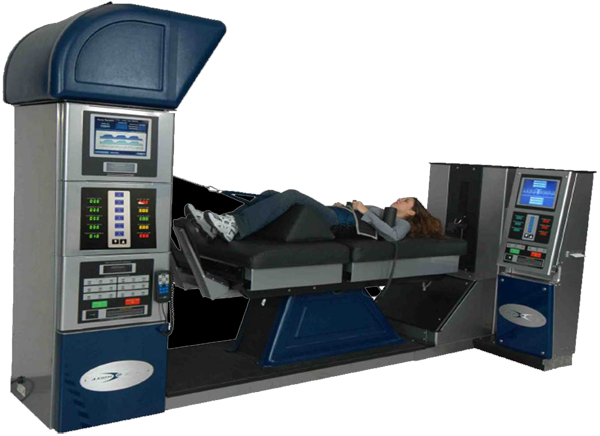
Non-Surgical Treatment for Disc Herniation
Chronic back pain caused by a disc herniation can lead to severe, often debilitating, pain in those who suffer from it, affecting both their quality of life and ability to work. Until recently, treatment for this condition has consisted mainly of spinal surgery and the use of narcotic pain reducers. Although these options can lead to relief, they both come with risks and potentially serious complications and side effects. Alternatives such as physical therapy and acupuncture can be less invasive, but often have limited results when it comes to disc herniation, leaving patients with few options. However, a cutting edge therapy called Advanced Non-Surgical Spinal Decompression Technology is revolutionizing the treatment of chronic back pain and finally providing those who suffer a safe and effective solution.
What is a disc herniation?
A disc herniation occurs when one of the gel-like cushions separating the vertebrae bulges out through the center, placing pressure on nerves and surrounding tissue. Although this can be caused by trauma or work-related injury, it is most often a degenerative problem associated with age. Conditions caused by disc herniation include sciatica, muscle weakness, in-coordination, bladder and bowel weakness, and erectile dysfunction.
How does Advanced Non-Surgical Spinal Decompression Technology work?
This treatment works by stretching the spine in a very controlled and specific manner in order to target specific discs within the spinal column. As the spine is stretched and the discs are decompressed, a negative pressure (much like a vacuum effect) is created, pulling the herniated disc back into place, relieving pressure, and allowing for the negative conditions associated with herniated discs to heal. This treatment is completed over multiple sessions and is completely painless. Due to the advanced patient monitoring system, the computerized technology will continuously monitor how your body reacts while under care and make instantaneous changes so that your body is always in a state of relaxation.
How do I know if Non-Surgical Spinal Decompression Technology is right for me?
Although this non-surgical therapy has a high success rate and is helping patients across the country find relief from their back pain, it is unfortunately not the right treatment plan for everyone. If you are interested in this type of treatment, the best advice is to schedule a consultation with a chiropractor familiar with these techniques. At Middletown Chiropractic, we perform a comprehensive examination to determine the cause of your symptoms and the severity of the disc damage. We will also look to see if there are any reasons why you may not be a candidate for this non-surgical therapy, such as pregnancy or other back conditions. After determining the location of the disc herniation, and the severity of your symptoms, we will be able to program our technology to your body’s exact specifications and begin a treatment plan.
Middletown Chiropractic Provides Spinal Decompression for Clients!
We are excited to bring this groundbreaking treatment to our patients! Helping you live your best life is our goal and we want to provide our community with the best, most advanced non-surgical spinal decompression technology offered on the market today. At Middletown Chiropractic, we are ensuring that our patients have the highest probability of recovery. We have treated patients that have had such severe disc herniation pain that they couldn’t walk, have lost their jobs because they couldn’t work, have severe sciatic pain, muscular weakness, and in-coordination. Despite all of this, by the end of care, many were completely pain-free! Don’t continue to suffer from the pain of disc herniation, schedule a consultation with Dr. Ennis and find out if advanced non-surgical decompression technology can help you!
Related Care at Delaware Integrative Healthcare
An individualized evaluation helps determine the cause of symptoms and whether conservative care is appropriate.
Learn about spinal decompression therapy at Delaware Integrative Healthcare, read about disc decompression FAQs, and explore our Delaware locations.
This article is for educational purposes and is not a diagnosis or a substitute for individualized medical advice.
Additional Evidence-Based Resource
For additional evidence-based information, review NCCIH: Low-Back Pain.
Disc Herniation Does Not Always Cause Symptoms
Imaging can show disc changes in people who have no pain. Treatment decisions should therefore consider symptoms and examination findings, not imaging alone. A clinician should explain whether the scan finding matches the pattern of pain, numbness, or weakness.
Conservative Care and Natural Recovery
Many symptomatic disc herniations improve without surgery. A conservative plan may include education, gradual activity, exercises, medication guidance from an appropriate clinician, and selected hands-on or traction-based care. The right combination depends on the individual.
When a Surgical Opinion May Be Appropriate
Progressive weakness, severe persistent symptoms, or certain neurologic warning signs may require prompt specialist evaluation. A referral does not automatically mean surgery is necessary; it helps patients understand options and risks when conservative progress is limited.
Questions Before Starting Decompression
Ask how the diagnosis was established, what benefit is expected, how many sessions will be tried, what alternatives exist, and how progress will be measured. Treatment should be modified when it does not improve meaningful function.
Schedule Your Next Step
Learn more about Dr. ShaKira Lee or review care available at our Middletown office. New patients can request an appointment online, and current patients can use the existing-patient scheduling page.
This article provides general educational information and does not replace an individualized evaluation or medical advice.
Primary Spinal Decompression Resource
For a broader overview and more related patient guides, visit Disc Decompression FAQs.