
When Pain Keeps Coming Back: Understanding Radial ShockWave Therapy
When Pain Keeps Coming Back: Understanding Radial ShockWave Therapy
There comes a point when an ache stops feeling like something to “keep an eye on.” It becomes the heel pain that shows up with the first step in the morning. The elbow that makes lifting a coffee mug annoying. The shoulder that turns reaching into the back seat of the car into a small production.
Most people do not jump straight to a new treatment. They rest. They stretch. They change shoes, skip a workout, try massage, or wait for things to settle down. Sometimes that is enough. But when pain keeps returning or begins limiting daily life, it may be time for a more informed conversation.
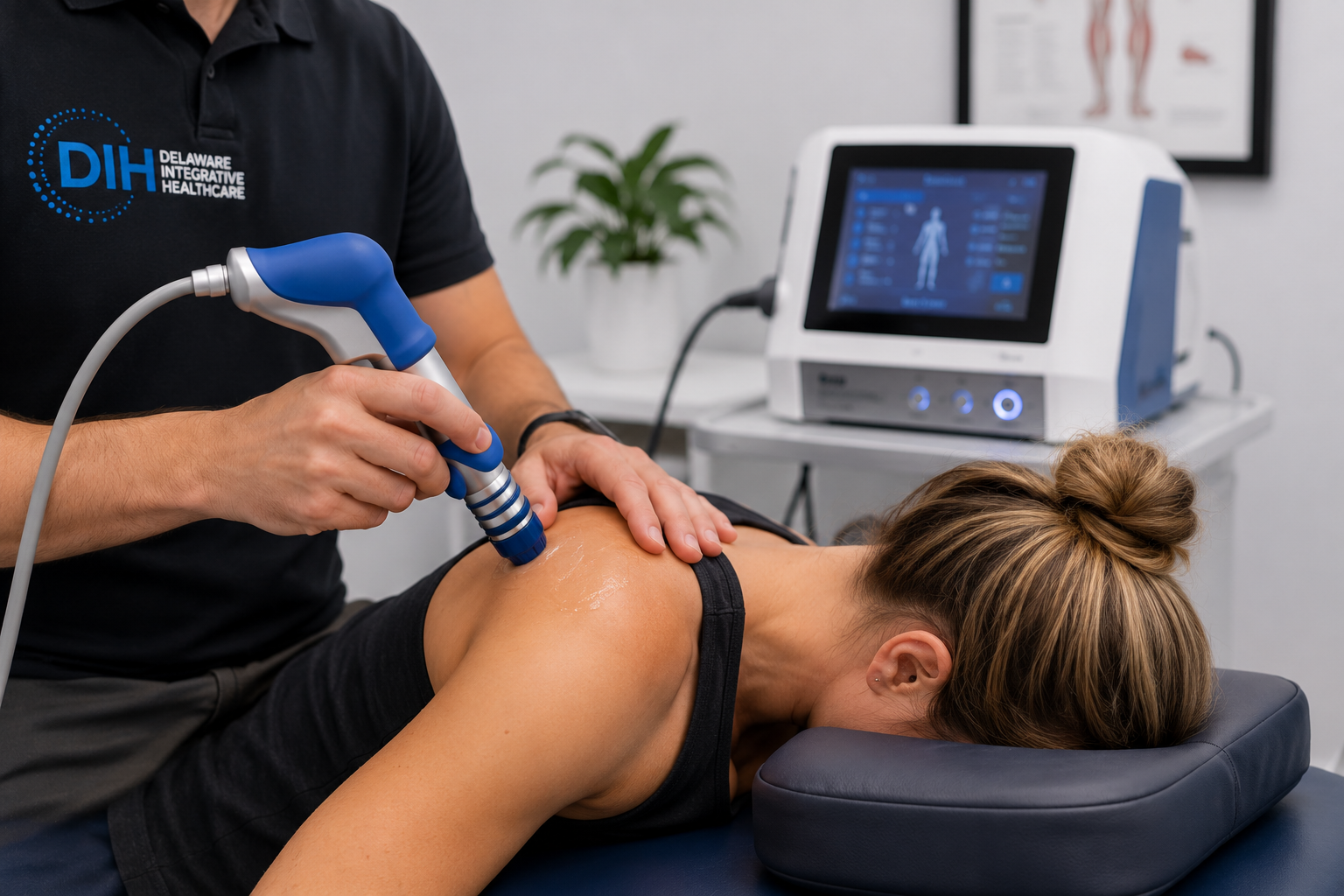
Radial ShockWave Therapy, also called radial pressure wave therapy, is a non-invasive option offered for chronic musculoskeletal concerns such as tendon injuries, plantar fasciitis, shoulder pain, and other soft-tissue conditions that have not responded well to traditional care.
What “Radial” Actually Means
Despite the name, radial shockwave therapy does not involve an electrical shock. It uses acoustic pressure waves delivered from outside the body.
The word “radial” describes how the energy spreads. Compared with focused shockwave therapy, which concentrates energy at a specific depth, radial therapy disperses energy across a broader and generally more superficial area. [2] That difference matters because treatment should be chosen for the person, the tissue involved, and the actual source of pain, not simply because a treatment sounds advanced.
It Is a Tool, Not a Diagnosis
Heel pain, shoulder pain, knee pain, and tendon discomfort can each have more than one cause. Two people may point to the same painful spot but need completely different care plans.
That is why the best first step is an evaluation. A provider can look at the history of the pain, movement patterns, prior injuries, activity level, and symptoms that may point to a different issue. Delaware Integrative Healthcare notes that the number of treatment sessions depends on the severity of the injury and the individual patient.
The goal is not to fit every injury into the same treatment. The goal is to determine whether radial pressure wave therapy belongs in the plan at all.
What the Research Actually Says
The honest answer is that shockwave therapy does not have the same level of evidence for every condition.
A 2023 systematic review found strong evidence that extracorporeal shockwave therapy can improve pain and function for plantar fasciitis. However, the evidence for patellar and Achilles tendinopathy was more mixed, with lower-certainty findings and less consistent results across studies.
A newer systematic review comparing radial and focused shockwave therapy for tendinopathy also found no clear overall winner for pain outcomes. The authors noted that treatment protocols, patient populations, and study quality varied considerably, so results should be interpreted carefully.
That is not bad news. It is useful news. It means the right question is not, “Does shockwave therapy work?” The better question is, “Does it make sense for my condition, my symptoms, and my recovery goals?”
Measure Progress in Real Life
Success is not always a dramatic before-and-after moment. It may look like getting out of bed with less heel pain, walking the dog without changing your stride, reaching overhead with less hesitation, or returning to an activity you have been avoiding.
Radial shockwave therapy may be a reasonable conservative option for the right patient and the right condition. It should not be presented as a miracle fix, a replacement for a proper diagnosis, or a guarantee of instant relief.
The most helpful treatment plans are built around clear answers, realistic goals, and a simple question: What would feeling better allow you to do again?
Sources
[1] Delaware Integrative Healthcare, “Radial ShockWave Therapy.”
[2] Stania, M., et al. “Efficacy of Radial and Focused Shockwave Therapy for Tendinopathy: A Systematic Review and Meta-Analysis.” Scientific Reports, 2026.
[3] Charles, R. C., Fang, L., Zhu, R., and Wang, J. “The Effectiveness of Shockwave Therapy on Patellar Tendinopathy, Achilles Tendinopathy, and Plantar Fasciitis: A Systematic Review and Meta-Analysis.” Frontiers in Immunology, 2023.
Contact Delaware Integrative Healthcare Today
At Delaware Integrative Healthcare, our specialists are committed to helping you find relief from migraines. Our experienced chiropractors will use a comprehensive approach to diagnose and treat your condition to give you the best results possible. We can provide treatments that may include spinal adjustments, myofascial release, lifestyle advice, and nutritional guidance.
By taking into account any underlying conditions or history of migraine headaches, we'll be able to determine what kind of intervention would be most effective for relieving your pain.
If you want to help to manage your migraine symptoms, contact us today at Delaware Integrative Healthcare and let us work with you to develop a personalized strategy. Our dedicated team is here to answer any questions about how chiropractic care could benefit you – call now!
Related Care and Resources
Learn more about DIH's chiropractic care options and how care is tailored to each patient's needs.
Patients can request an evaluation at our Milford, Middletown, New Castle and Dover locations.
Schedule Your Next Step
Learn more about Dr. Trevor Ennis. New patients can request an appointment online, and current patients can use the existing-patient scheduling page.
This article provides general educational information and does not replace an individualized evaluation or medical advice.